
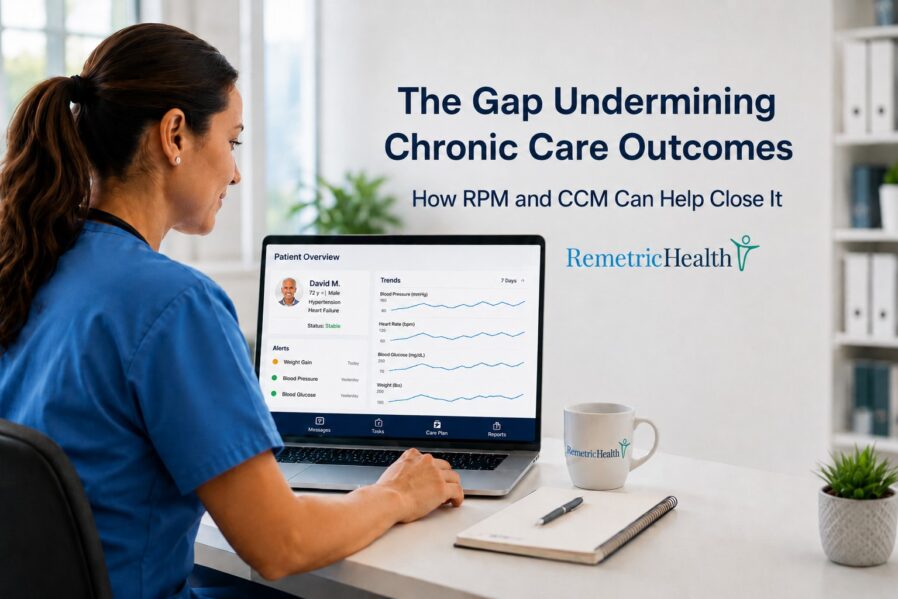
The Patient Engagement Gap Undermining Chronic Care Outcomes
Chronic disease management does not end when a patient leaves the exam room. For patients managing chronic conditions like hypertension, diabetes, COPD, heart failure, or chronic kidney disease, health outcomes are shaped by what happens every day between appointments.
That is where many care plans begin to break down.
Patients may understand what they need to do, but staying engaged over time is difficult. Medication routines change. Symptoms fluctuate. Diet and activity goals become harder to maintain. Warning signs may go unnoticed until they become urgent.
For providers, the challenge is clear: without consistent visibility and communication, it becomes harder to identify risks early, reinforce care plans, and help patients stay on track. The question is not whether patient engagement matters. It is how practices can support engagement consistently without adding more strain to already busy clinical teams.
Remote Patient Monitoring (RPM) and Chronic Care Management (CCM) programs can help close that gap.
Together, RPM and CCM create a more connected model of care. RPM gives providers and clinical teams better visibility into patient health data between visits, while CCM provides the communication, education, and care coordination needed to turn that data into meaningful action.
For practices, this can improve patient engagement, strengthen chronic disease management, support better outcomes and quality measures, and create a more scalable approach to caring for high-risk patients.
What Is the Patient Engagement Gap in Chronic Care?
The patient engagement gap occurs when patients with chronic conditions lose consistent connection with their care team between office visits. This can lead to missed warning signs, poor medication adherence, delayed follow-up, and higher risk of avoidable complications.
Remote Patient Monitoring and Chronic Care Management help close this gap by combining health data, patient outreach, education, care coordination, and clinical support between appointments.
What You’ll Learn in This Article
- How consistent chronic care can support patients, providers, and practice performance
- Why patient engagement is essential to chronic care success
- How disengagement affects outcomes and costs
- How RPM and CCM work together to keep patients connected
- Best practices for building a scalable engagement model
Why Patient Engagement Matters in Chronic Care
Many chronic conditions require daily patient participation. Blood pressure readings, glucose levels, medication adherence, symptom tracking, nutrition, activity, and follow-up communication all play a role in long-term disease control.
The problem is that traditional care models often rely on periodic office visits to evaluate progress. That leaves long gaps where providers may have limited insight into how patients are doing.
During those gaps, patients can become disengaged for many reasons. Some may feel overwhelmed by their care plan. Others may not fully understand how their daily behaviors affect their condition. Some may miss medications, ignore early symptoms, or delay follow-up because they do not feel an immediate concern.
Over time, these small breakdowns can have serious consequences.
Disengagement can contribute to poor disease control, preventable complications, more frequent emergency room visits, avoidable hospitalizations, and higher overall healthcare costs. It can also create more pressure on providers, who are often forced to react to problems after they have already escalated.
For chronic care to be effective, practices need a model that keeps patients connected, informed, and supported between visits.
How Disengagement Affects Chronic Disease Outcomes
Patients who are more engaged in their care are often better positioned to follow treatment plans, report symptoms earlier, understand their health trends, and take action before problems become severe. For chronic disease management, those behaviors matter.
Missed Warning Signs
A patient with hypertension may not feel symptoms when their blood pressure rises. Without regular monitoring, an elevated reading may go unnoticed.
A patient with COPD may not recognize subtle changes in respiratory function until symptoms become more serious. A patient with diabetes may struggle to connect daily habits with longer-term health outcomes without consistent feedback and education.
Engagement helps bridge the gap between clinical recommendations and daily patient behavior.
Poor Disease Control
When patients are not consistently supported, care plans can become harder to follow. Medications may be missed. Lifestyle recommendations may lose urgency. Follow-up instructions may be misunderstood or forgotten.
Over time, this can make chronic conditions harder to control and increase the likelihood that patients experience avoidable complications.
Delayed Intervention
Without consistent communication and visibility, clinical teams may not know when a patient’s condition is changing. That limits the ability to intervene early.
When providers have access to relevant patient data and clinical teams communicate with patients between visits, it reinforces accountability and helps patients feel less isolated in managing their condition.
Higher Risk of Avoidable Utilization
When early warning signs are missed, patients are more likely to need higher-acuity care. This can lead to emergency room visits, hospital admissions, readmissions, specialist escalation, and additional testing.
This is why consistent engagement is so important. It helps practices move from reactive chronic care to a more proactive, connected model.
The Economic Impact of Patient Disengagement
Patient disengagement affects more than health outcomes. It also contributes to rising costs across the healthcare system.
When chronic conditions are not managed consistently, patients are more likely to experience acute events that require higher-cost care. Emergency room visits, hospital admissions, readmissions, specialist escalation, and additional testing can all increase when early warning signs are missed.
For patients, that can mean higher out-of-pocket costs, more disruption to daily life, and a greater burden on families and caregivers.
For providers and healthcare organizations, disengagement can increase administrative workload, strain clinical resources, and make chronic care programs harder to sustain.
Engaged patients, on the other hand, are more likely to participate in care plans, complete follow-ups, share relevant health information, and respond to clinical outreach. That creates a stronger foundation for value-based care, improved quality performance, and more efficient use of clinical resources.
RPM and CCM also create reimbursement opportunities for eligible providers when programs are properly implemented and documented. For practices managing large chronic care populations, these programs can support both better patient care and more sustainable practice operations.
How RPM and CCM Help Close the Engagement Gap
Creating patient engagement does not have to mean adding more work to already overwhelmed staff. The right model combines technology, clinical support, workflow integration, and patient-friendly communication.
RPM and CCM are especially valuable because they address two sides of the same problem: visibility and support.
RPM Creates Visibility Between Visits
Remote Patient Monitoring helps providers track patient health data outside of the office. Depending on the condition and care plan, this may include readings such as blood pressure, weight, blood glucose, pulse oximetry, or pulmonary function data from connected monitoring devices.
This creates a more consistent view of patient status and helps clinical teams identify changes sooner. Like lab work, RPM provides data that helps providers better understand what is happening with the patient between visits.
RPM also helps patients become more aware of their own health. When patients regularly take readings and see how their numbers change over time, they can better understand how their actions affect their condition.
CCM Provides the Human Support Behind the Data
Chronic Care Management adds the ongoing communication, encouragement, education, care coordination, and clinical support that many patients need to stay engaged.
CCM can include monthly outreach, medication review support, care plan updates, patient education, coordination with providers, and help addressing barriers to care, such as transportation or nutrition.
While RPM shows what is happening, CCM helps explain why it may be happening and what should happen next.
Why RPM and CCM Work Better Together
RPM and CCM are powerful on their own, but they are especially effective when used together.
RPM provides the data. CCM provides the relationship-based support. Together, they help practices deliver more consistent chronic care between visits while giving providers additional resources to support their work.
For patients with multiple chronic conditions, this combined model can be especially valuable because it supports both condition monitoring and broader care coordination.
Improve Patient Engagement without Adding More Work to Your Staff.
Learn how RemetricHealth’s RPM and CCM programs help practices keep patients connected between visits.
Best Practices for Building a Scalable Chronic Care Engagement Model
A successful engagement program requires more than technology. Practices need clear workflows, patient-friendly onboarding, defined monitoring protocols, and a clinical process that turns information into action.
A full-service RPM and CCM partner can serve as an extension of the practice, helping support patient communication, documentation, escalation, and ongoing program performance.
For practices managing these programs internally, the same principles apply: the model must be simple for patients, clear for staff, and scalable as the patient population grows.
Simplify Patient Onboarding
Patient engagement starts at enrollment. If patients do not understand the program, how to use their device, or why participation matters, they are less likely to stay involved.
Effective onboarding should explain:
- What the program includes
- Why the patient was selected
- What readings or interactions are expected
- How the information will be used
- Who will contact the patient and when
- How the program supports their care plan
The goal is to make participation feel simple, valuable, and connected to the provider’s care plan.
Combine RPM and CCM Strategically
RPM and CCM should not operate as disconnected programs. They work best when they support the same patient engagement strategy.
RPM creates visibility into patient health trends. CCM adds the ongoing communication and care coordination needed to help patients understand those trends and stay involved in their care.
Together, they help practices deliver a more complete chronic care model.
Avoid Low-Touch, Device-Only Programs
One of the most common mistakes in chronic care engagement is treating RPM as a device-only program.
Devices alone do not create engagement. Patients need follow-up. They need context and education. They also need to know that someone is reviewing their information and that their participation matters.
A low-touch program may collect data, but it may not produce meaningful engagement or support stronger outcomes.
Use Clinical Staff to Reinforce the Care Plan
Clinical staff, both inside and outside the practice, play a critical role in patient engagement. Nurses, care coordinators, and trained clinical teams can help patients understand readings, identify barriers, answer questions, and reinforce provider recommendations.
That human connection is often what keeps patients participating long term.
Create Clear Monitoring and Escalation Workflows
As patient populations grow, practices need engagement models that are both effective and scalable.
The right model should combine technology, clinical support, workflow integration, and clear escalation protocols. Automation can help manage reminders, documentation, and workflow efficiency, but it should not replace personalized clinical communication.
A scalable RPM and CCM program should include:
- Simple patient enrollment workflows
- Clear monitoring protocols
- Defined alert thresholds
- Consistent patient outreach
- Documentation processes that support compliance
- Clinical escalation pathways
- Reporting that helps practices evaluate program performance
The goal is to create a system that supports more patients without overwhelming internal staff.
With the right partner, practices can extend chronic care beyond the office, strengthen patient relationships, and create a more consistent experience for patients managing long-term conditions.
Consistent Engagement Is the Foundation of Better Chronic Care
Chronic care requires consistent connection, timely intervention, and ongoing patient support.
When patients are engaged, they are more likely to understand their condition, follow their care plan, respond to outreach, and take an active role in their health. When providers have better visibility into patient status between visits, they can act sooner and manage chronic conditions more effectively.
RPM and CCM help make that possible.
By combining remote health data with clinical communication and care coordination, practices can build a stronger chronic care model that supports patients between visits, improves program performance, and reduces the burden on internal teams.
Improve Patient Engagement, Outcomes, and Program Performance
Ready to strengthen your chronic care strategy?
RemetricHealth helps healthcare organizations implement RPM and CCM programs designed to keep patients connected, informed, and supported between visits.
FAQ
What is patient engagement in chronic care?
Patient engagement in chronic care refers to how actively patients participate in managing their condition. This can include taking medications, monitoring health readings, following care plans, attending appointments, reporting symptoms, and communicating with their care team.
Why is patient engagement important for chronic disease management?
Patient engagement is important because many chronic conditions require daily action outside of the office. Medication adherence, symptom awareness, monitoring, nutrition, activity, and follow-up communication all influence long-term outcomes.
How does Remote Patient Monitoring improve patient engagement?
Remote Patient Monitoring improves patient engagement by giving patients and providers more visibility into health trends between visits. Regular readings can help patients better understand their condition and help providers identify changes that may require follow-up.
How does Chronic Care Management support patient engagement?
Chronic Care Management supports patient engagement through ongoing communication, education, care coordination, medication support, and care plan management. CCM helps reinforce healthy behaviors and keeps patients connected to their provider between visits.
Why should practices combine RPM and CCM?
Practices should combine RPM and CCM because RPM provides health data, while CCM provides the clinical communication and care coordination needed to act on that data. Together, they create a more complete chronic care model.
How can practices improve patient engagement without overloading staff?
Practices can improve patient engagement by simplifying onboarding, increasing early touchpoints, using clinical staff for follow-up, combining RPM and CCM, and avoiding low-touch programs that rely on devices without meaningful patient communication.
Leave A Comment