
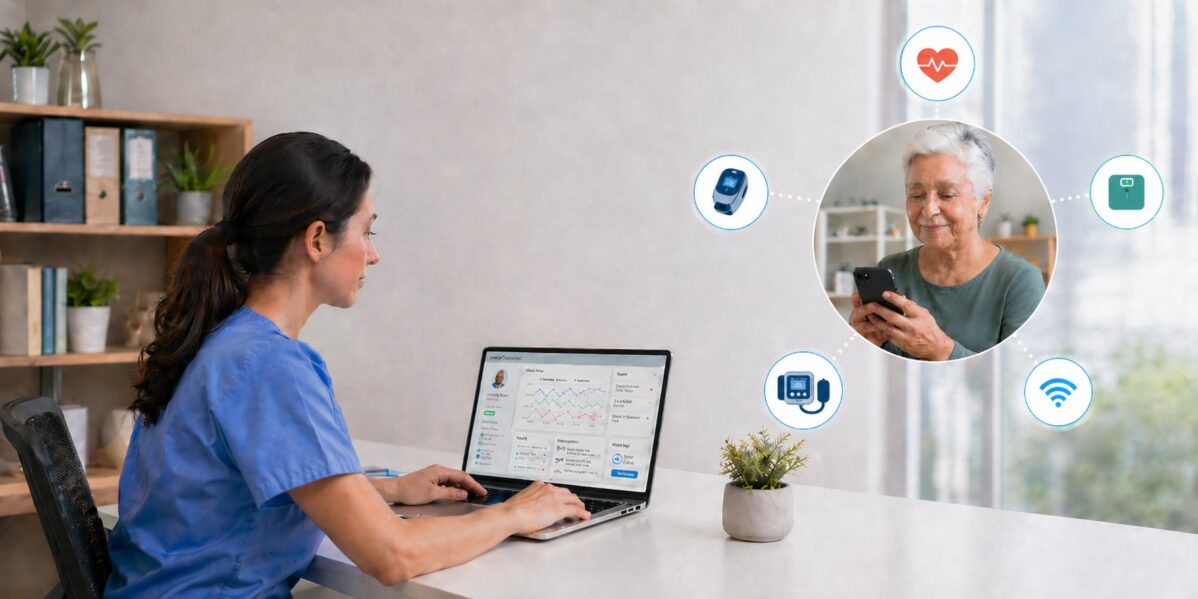
Best Practices to Operationalize Care Management
Care management is no longer a side initiative for practices treating patients with chronic conditions. It has become an operational necessity. As chronic disease continues to drive care complexity, practices need a structured way to support patients between visits, coordinate care, monitor changes, and keep providers focused on the highest-value clinical work. Successful care management requires structure, consistency, and dedicated time. For many practices, especially in today’s environment, building and sustaining all of that internally is not always realistic. Care management is not just a program. It is an ongoing operational function that requires clinical oversight, reliable workflows, and continuous patient engagement.
What we see most often is one of two paths.
- Some practices choose to build internal care management teams over time, gradually adding staff and infrastructure as their programs grow.
- Others extend their care team by partnering with an organization that focuses specifically on care management and operates as an extension of the practice.
Both approaches can be effective when executed well.
What matters most is not which path a practice chooses, but how the care is delivered. Regardless of the model, care management must be consistent, compliant, and clinically meaningful. Just as importantly, it must be designed in a way that supports providers and staff rather than adding burden to already full schedules. When care management is structured intentionally, whether internally or through a partner, it should integrate seamlessly into daily workflows and enhance care delivery without overwhelming clinical teams.
What you’ll learn:
In the first article in this series, we explored why chronic care management is becoming more important as care moves beyond the visit. In the second, we broke down how programs like CCM, APCM, RPM, and RTM fit together. This final article focuses on execution: how to operationalize care management in a way that is sustainable for patients, providers, and practices. This article explains how practices can build a sustainable care management program by defining eligible patient populations, assigning clear care team roles, standardizing workflows, supporting documentation, and using programs like CCM, APCM, RPM, and RTM to improve care between visits.
Structure Determines Success
Structure ultimately determines success. Care management programs absolutely create opportunity, but only when they are implemented with the right foundation. Without clear structure, even well-intentioned programs can become difficult to manage, inconsistent in delivery, and hard to sustain.
The foundation of a successful care management program starts with clearly defining who the program is for. That means identifying the patient populations that will benefit most and establishing eligibility criteria that make clinical and operational sense.
Equally important is role clarity across the care team. Care management works best as a team-based effort, not as additional work added onto a provider’s already full plate. When responsibilities are clearly defined—who enrolls patients, who monitors, who escalates, and who provides oversight—care becomes more coordinated and easier to deliver consistently. Avoid the temptation to have one individual to which everything flows. This can create a bottleneck and become a risk to the program if that person leaves.
Consistent workflows and clinical protocols are the third critical component. From enrollment through escalation, there must be a clear and repeatable process in place so that care is delivered intentionally, documented properly, and compliant with payer expectations. When workflows are standardized, care management becomes easier to run, easier to scale, and far less burdensome for providers and staff. Providers spend less time worrying about rules and documentation and more time focused on patient care.
Return on Investment
From a reimbursement standpoint, the economics of well-run care management are strong. Medicare remains the most consistent payer for these services today. Medicaid and commercial reimbursement can vary by plan and by state, which is why many organizations choose to pilot programs before scaling. In some cases, care management initiatives are also supported through grant funding, particularly for safety-net organizations and population health efforts.
Importantly, care management creates multiple paths to sustainable revenue rather than relying on a single reimbursement stream.
- Clinically, this is where the greatest impact is seen. Care management improves medication adherence and helps patients follow through care plans, which is often the most challenging part of disease management.
- Operationally, practices see reductions in emergency department visits and hospital admissions, along with more efficient use of provider and clinical staff time. The goal is to shift work upstream by identifying and addressing issues early, rather than reacting after something goes wrong.
- Care management also supports performance on quality measures tied to chronic disease management, such as blood pressure control, diabetes outcomes, and preventive care. This positions practices well for value-based revenue opportunities, including ACO performance and in HRSA UDS measures, state-led quality initiatives, and other incentive programs.
While care management is financially advantageous, it is not just about generating revenue today. It is about building the infrastructure needed to succeed as payment models continue to evolve and to slow the vicious cycle created by rising complexity, shrinking resources, and reactive care.
Bringing it All Together
As we wrap up, there are a few key takeaways worth emphasizing. Chronic disease defines the majority of care delivered today. Primary care looks fundamentally different than it did even ten or fifteen years ago. Most care is now longitudinal, complex, and ongoing, and one visit at a time is no longer enough to change patient trajectories.
Changing that trajectory requires care beyond the visit. Outcomes are often driven by what happens between visits—medication adherence, follow-up, education, monitoring, care coordination, and patient engagement. Office visits remain critical, but meaningful improvement depends on consistent support outside of them.
CMS and payers are increasingly acknowledging this reality and evolving reimbursement models to support care beyond the visit. APCM is a clear example of payment beginning to catch up to how care is actually delivered. However, success ultimately depends on structure and compliance. Care management works when it is intentional, well-designed, and sustainable. Without the right framework, it becomes fragmented and inefficient.
At its best, care management feels like an extension of the practice. It supports providers, strengthens care teams, and meets patients where they are.
Care management works best when it is structured, consistent, and built around the realities of daily practice operations. RemetricHealth helps providers extend care beyond the visit with RPM and chronic care management services designed to support patients, reduce staff burden, and strengthen long-term care strategies.
Schedule a demo to learn how RemetricHealth can help your practice operationalize care management.
Frequently Asked Questions
What is the most important part of a successful care management program?
The most important part of a successful care management program is structure. Practices need clear patient eligibility criteria, defined care team roles, standardized workflows, documentation processes, and escalation protocols so care is consistent and sustainable.
How can care management reduce provider burden?
Care management reduces provider burden by shifting routine outreach, monitoring, documentation, and follow-up support to a structured care team. This helps providers focus on clinical decision-making while patients continue receiving support between visits.
What patients benefit most from care management?
Patients who benefit most from care management often have multiple chronic conditions, frequent hospitalizations, medication adherence challenges, uncontrolled conditions, or ongoing needs that require support between regular office visits.
How do RPM services support chronic care management?
RPM services support chronic care management by giving care teams access to patient health data between visits. This can help identify changes earlier, improve follow-up, support medication adherence, and guide timely interventions.
Is care management only about reimbursement?
No. Reimbursement can help make care management sustainable, but the broader value includes better patient engagement, improved care coordination, reduced avoidable utilization, stronger quality performance, and less strain on providers and staff.
Leave A Comment