
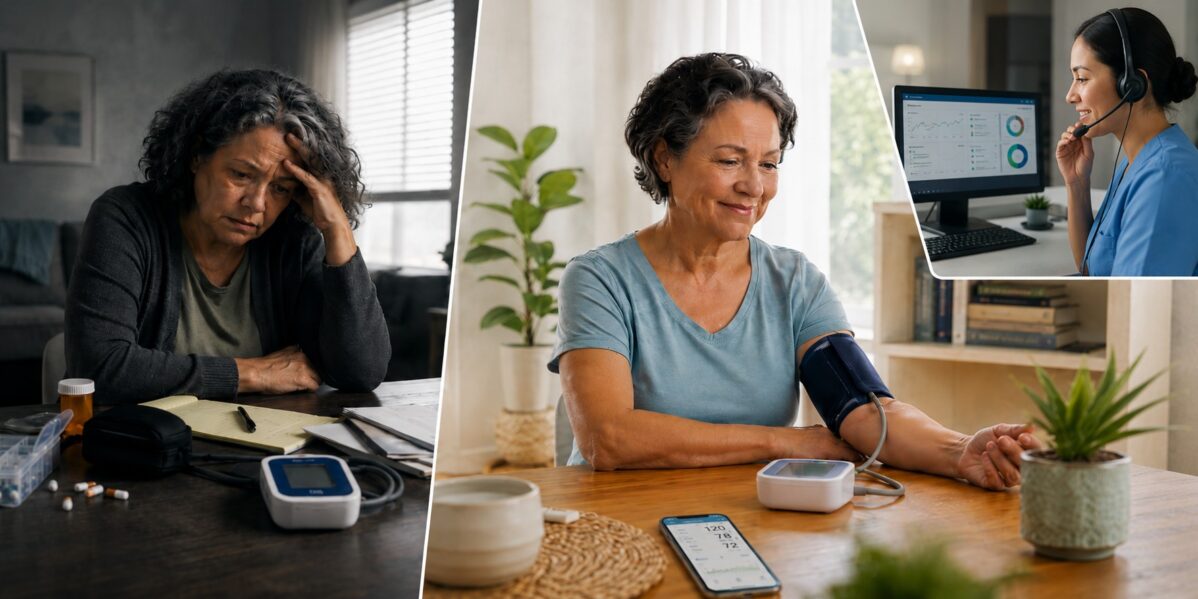
Why Patients Disengage and How to Re-Energize Them
Managing a chronic condition is not easy for patients.
Even when a provider creates a clear care plan, patients may struggle to follow it consistently once they leave the office. Medications can be missed. Symptoms may be ignored. Readings may not be tracked. Follow-up appointments may be delayed. Over time, patients can slowly become disconnected from their care plan without realizing the impact until their condition worsens.
For healthcare providers, this creates a major challenge.
Chronic disease management depends heavily on what patients do between visits. But traditional care models often provide limited visibility into patient behavior, health trends, and barriers outside the clinical setting.
That is why patient disengagement is one of the biggest obstacles to better chronic care outcomes.
That is where many care plans begin to break down.
Patients may understand what they need to do, but staying engaged over time is difficult. Medication routines change. Symptoms fluctuate. Diet and activity goals become harder to maintain. Warning signs may go unnoticed until they become urgent.
For providers, the challenge is clear: without consistent visibility and communication, it becomes harder to identify risks early, reinforce care plans, and help patients stay on track. The question is not whether patient engagement matters. It is how practices can support engagement consistently without adding more strain to already busy clinical teams.
Remote Patient Monitoring (RPM) and Chronic Care Management (CCM) programs can help close that gap by identifying disengagement earlier, reconnecting patients with their care plan, and providing the consistent chronic care support between visits needed to sustain long-term behavior change.
Together, RPM and CCM create a more connected model of care. RPM gives providers and clinical teams better visibility into patient health data between visits, while CCM provides the communication, education, and care coordination needed to turn that data into meaningful action.
For practices, this can improve patient engagement, strengthen chronic disease management, support better outcomes and quality measures, and create a more scalable approach to caring for high-risk patients.
This article explains:
- Why patients disengage from chronic care
- How disengagement affects outcomes and costs
- How RPM improves patient accountability
- How CCM reinforces behavior change
- What practices can do to re-engage patients more effectively
- How consistent chronic care can support patients, providers, and practice performance
- Why patient engagement is essential to chronic care success
- How disengagement affects outcomes and costs
- How RPM and CCM work together to keep patients connected
- Best practices for building a scalable engagement model
The Clinical and Financial Cost of Patient Disengagement
Patient disengagement can start quietly.
A patient may skip blood pressure readings for a few days. Another may forget to take medication as prescribed. Someone else may stop following nutrition recommendations because they do not feel any immediate symptoms. These behaviors may seem minor at first, but for patients with chronic conditions, small gaps can lead to larger clinical problems.
When patients disengage, providers may have fewer opportunities to identify warning signs early. This can lead to delayed interventions, worsening disease control, increased acute events, and higher utilization of emergency or inpatient care.
The financial impact can also be significant.
Unmanaged chronic conditions often lead to more expensive care episodes. Emergency room visits, hospital admissions, readmissions, medication changes, additional testing, and specialist escalation can all increase when patients are not consistently engaged.
Because chronic diseases are a major driver of healthcare costs, even small improvements in engagement can have meaningful clinical and financial implications.
For practices, disengagement can also make chronic care programs harder to manage. Staff may spend more time reacting to urgent issues instead of supporting proactive care. Providers may have less complete information when making clinical decisions. Patients may feel frustrated, overwhelmed, or unsupported.
In many cases, disengagement is not caused by a lack of concern. It is caused by a lack of connection and support to form lasting behavior changes.
Root Causes of Disengagement
Patients disengage for many reasons. Understanding those reasons is the first step toward fixing the problem.
Lack of Visibility into Health Data
Many patients do not fully understand how their condition changes over time. If they only receive feedback during office visits, they may not see the connection between daily habits and long-term health outcomes.
For example, a patient with hypertension may not feel different when their blood pressure is elevated. Without regular monitoring and feedback, they may not recognize the seriousness of uncontrolled readings.
For patients managing long-term conditions, Remote Patient Monitoring programs can help make health trends more visible and actionable to patients and providers between appointments.
Limited Provider Interaction Between Visits
Patients are more likely to disengage when they feel like they are managing their condition alone.
A care plan may be discussed during an appointment, but weeks or months can pass before the next provider interaction. During that time, patients may have questions, experience symptoms, encounter medication challenges, lose motivation, or just plain forget.
Chronic Care Management support helps fill this gap by creating more consistent communication between patients and their care team.
Overly Complex Care Plans
Chronic care plans can become overwhelming, especially for patients managing multiple conditions.
Medication schedules, lifestyle changes, monitoring requirements, specialist appointments, diet recommendations, and insurance concerns can all compete for attention. If the care plan feels too complicated, patients may disengage because they do not know where to start.
Simplifying the care experience is essential.
Lack of Immediate Feedback
Patients are more likely to stay engaged when they understand why their actions matter. If they do not receive feedback, they may not see the value in taking readings, following a care plan, or responding to outreach.
Consistent feedback helps reinforce progress and provides opportunities to correct issues before they become larger problems.
How RPM Reintroduces Patient Accountability
Remote Patient Monitoring helps re-engage patients by making their health data part of their routine care experience.
When patients regularly take readings, they become more aware of their condition. They can begin to see patterns, recognize changes, and understand how their daily choices may affect their health.
RPM also reinforces accountability because patients know their care team is receiving and reviewing relevant information. This can make participation feel more meaningful than simply tracking numbers on their own.
For providers, RPM creates better visibility into patient status between visits. Instead of waiting for the next appointment, clinical teams can identify concerning trends sooner and respond when appropriate.
This helps shift chronic care from reactive to proactive.
RPM can support patient accountability by:
- Encouraging regular participation
- Making health trends more visible
- Helping patients connect behaviors with outcomes
- Giving providers more timely data
- Creating opportunities for earlier outreach
However, RPM should not be treated as a device-only program. The data must be paired with communication and follow-up to create meaningful engagement.
Practices should also understand CMS guidance on remote patient monitoring when designing RPM workflows, documentation, and billing processes.
How CCM Reinforces Behavior Change
Chronic Care Management provides the ongoing human support that patients need to stay engaged.
Behavior change is difficult, especially when patients are managing conditions that require long-term lifestyle adjustments. Education, coaching, reminders, and care coordination can help patients better understand their condition and remain connected to their care plan.
CCM reinforces engagement by giving patients regular access to support between visits. This may include reviewing care goals, answering questions, addressing barriers, coordinating services, and helping patients understand provider recommendations.
For patients, that communication can make chronic care feel more manageable.
For providers, CCM helps ensure patients are not left on their own between appointments.
CCM can reinforce behavior change through:
- Patient education
- Medication support
- Care plan reinforcement
- Monthly communication
- Coordination with providers and specialists
CMS guidance on chronic care management services outlines how eligible providers can support patients with multiple chronic conditions through structured care management.
When combined with RPM, CCM becomes even more powerful because the care team can use patient data to guide more relevant conversations.
Implementation Tips to Improve Engagement
Re-engaging patients requires a clear, practical strategy. The goal is not to overwhelm patients with more tasks. The goal is to make participation easier, more valuable, and more connected to their care.
Keep Workflows Simple
Patients are more likely to participate when the process is easy to understand.
Use simple instructions, clear expectations, and patient-friendly onboarding. Make sure patients know how to use their monitoring device, when to take readings, and who to contact if they have questions.
Increase Touchpoints Early
The early stage of enrollment is critical.
Patients may need extra support as they adjust to the program. Early touchpoints help build trust, answer questions, and reinforce the value of participation.
This is especially important for patients who are less comfortable with technology or who have previously struggled to follow care plans.
Avoid “Set It and Forget It” Programs
One of the biggest mistakes in chronic care engagement is assuming that enrollment alone equals participation.
Patients need follow-up. They need reminders. They need feedback. They need to know that their care team is paying attention.
Programs that rely only on devices or automated workflows may fail to build the relationship needed for sustained engagement.
Practices need a clear process for outreach, documentation, and escalation when they are building a sustainable care management program.
Use Data to Personalize Outreach
RPM data can help clinical teams make patient communication more relevant.
Instead of generic check-ins, care teams can discuss specific readings, trends, concerns, or improvements. This makes outreach more meaningful and helps patients understand the connection between their daily habits and their health.
Reinforce Small Wins
Patient engagement improves when patients feel progress.
Care teams should acknowledge participation, improvement, and consistency. Even small wins can help patients stay motivated and build confidence in managing their condition.
See what active patients think of the RemetricHealth program.
Re-Engagement Requires Visibility, Communication, and Support
Patients do not disengage from chronic care because they do not care about their health. More often, they disengage because care feels complicated, disconnected, or difficult to manage on their own.
RPM and CCM help address that problem.
RPM gives patients and providers better visibility into health trends. CCM provides the ongoing communication and education needed to support behavior change. Together, they create a stronger model for reconnecting patients with their care plan.
For practices, this can lead to better engagement, more proactive chronic care, and a more sustainable way to support patients between visits.
RemetricHealth helps healthcare organizations implement RPM and CCM programs that keep patients connected, supported, and engaged. Learn how RemetricHealth can help your practice strengthen chronic care engagement with RPM and CCM.
FAQ
Why do patients disengage from chronic care?
Patients often disengage because care plans feel complex, communication is limited between visits, they do not understand their health data, or they lack consistent support.
How can RPM help re-engage patients?
RPM helps re-engage patients by making health readings more visible and creating a regular routine for participation. It also helps providers identify changes and follow up when needed.
How does CCM improve patient engagement?
CCM improves engagement through ongoing communication, education, care coordination, and support. It helps patients stay connected to their care plan between office visits.
What is the biggest mistake practices make with patient engagement programs?
A common mistake is creating a low-touch program that relies on devices or automation without enough clinical follow-up. Patients need communication and feedback to stay engaged.
Can RPM and CCM work together?
Yes. RPM provides patient health data, while CCM provides the communication and care coordination needed to act on that data. Together, they support a more complete chronic care engagement model.
Leave A Comment